
This gap between billing and getting paid is one of the most common cash flow killers for small businesses. In fact, 59% of businesses had invoices overdue by 30+ days in 2026, up sharply from 47% the year before, according to QuickBooks' Small Business Late Payments Report.
Invoice factoring offers a way out. It converts your unpaid invoices into immediate working capital, without adding debt to your balance sheet.
This guide breaks down how factoring works, the different types available, what it costs, and how to know if it's the right move for your business.
Key Takeaways
- Factoring typically advances 70%-90% of invoice value within 24-48 hours of approval
- Monthly fees run 1%-5% of invoice value, based on customer credit and payment speed
- Four factoring types cover most needs: recourse, non-recourse, spot, and contract
- Approval hinges on your customers' credit, not yours—often easier to get than a bank loan
What Is Small Business Invoice Factoring?
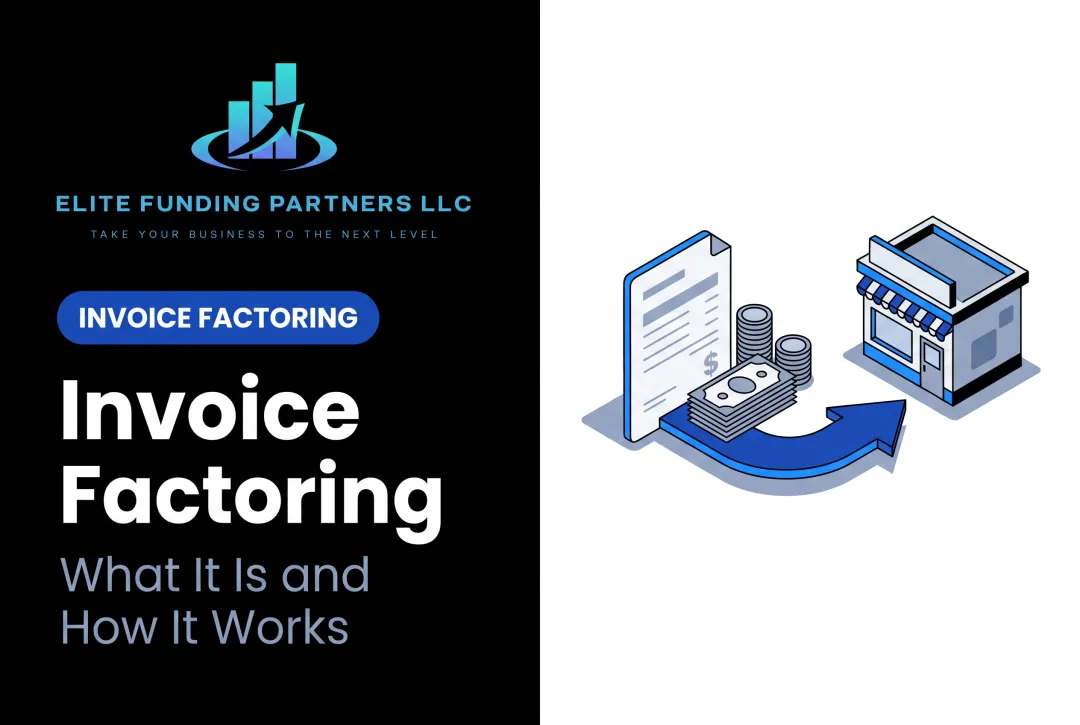
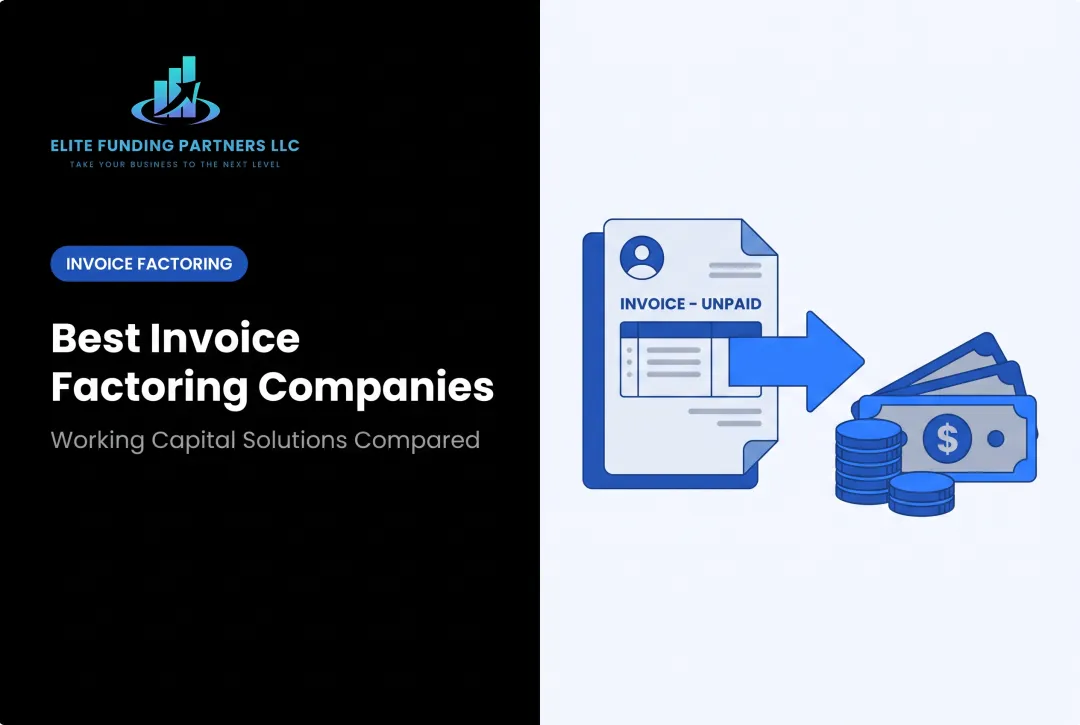
Invoice factoring means selling your unpaid invoices to a third-party company (a "factor") at a discount in exchange for immediate cash. Instead of waiting 30, 60, or 90 days for a customer to pay, you get most of that money today.
The payment structure works in two parts:
- Upfront advance — you receive a percentage of the invoice value right away
- Remaining balance — once your customer pays the factor in full, you get the rest, minus fees
Here's the part that surprises a lot of business owners: factoring approval depends on your customers' credit history, not yours. If you're invoicing creditworthy commercial clients, you can often qualify even with limited business credit or a short operating history.
This matters because cash flow gaps aren't rare. Businesses waiting on unpaid invoices were owed an average of $17,700, and 51% of businesses with overdue invoices said cash flow was a real problem, according to a QuickBooks late-payments report.
Nearly 4 in 10 said a single late payment made it hard to cover payroll or bills.
Invoice Factoring vs. Invoice Financing
These terms get used interchangeably, but they're structurally different:
- Factoring: You sell the invoice. The factor owns it and collects directly from your customer.
- Financing: You borrow against the invoice as collateral. You still own it and remain responsible for collecting payment.
The practical difference is control. With factoring, the factor may contact your customer directly to collect. With financing, that relationship stays entirely with you.
How Invoice Factoring Works
The process is more straightforward than most financing products. Here's the typical flow:
- Submit your invoices: Send unpaid invoices to the factoring company for verification of amounts, terms, and customer details.
- Factor reviews and assesses risk: The company evaluates the creditworthiness of the businesses you're invoicing, not just your own financials.
- Get your advance: Once approved, funds (commonly 70%–90% of invoice value) land in your business bank account, often within 24–48 hours.
- Factor collects and settles: Your customer pays the factor directly. Once that happens, you receive the remaining balance, minus fees.

Elite Funding Partners' invoice factoring product, for example, provides advances from $30,000 up to $15 million, with terms up to 24 months and a straightforward online application. That range covers both short-term cash gaps and longer growth cycles.
Understanding Factoring Fees and Rates
Factor fees typically run 1%–5% of the invoice value per month, according to NerdWallet's invoice factoring guide. What drives that range:
- Invoice size and volume: larger, consistent volumes often get better rates
- Industry: construction and healthcare invoices tend to price differently than staffing or transportation
- Customer payment speed: the longer your customer takes to pay, the more the fee accrues
Watch for extra charges beyond the base fee, too:
- Origination fees
- Monthly minimum volume requirements
- Early termination penalties
Not every factoring company charges these, but they're common enough to confirm in writing before you sign.
Types of Invoice Factoring
Not all factoring arrangements work the same way. Here's how the four main types differ:
| Type | How it works | Cost/risk tradeoff |
|---|---|---|
| Recourse | You remain liable if your customer never pays | Lower fees, but you carry the nonpayment risk |
| Non-recourse | The factor absorbs the loss on nonpayment (with contract limits) | Higher fees, less risk on your end |
| Spot | Sell individual invoices as needed, no ongoing commitment | Flexible, but often pricier per invoice |
| Contract | Commit to factoring a set volume over a fixed term | Lower rates, less flexibility |

Recourse factoring is the most common and typically the cheapest, since you're still on the hook if a customer defaults. Non-recourse shifts that risk to the factor, but you'll pay more for the protection.
If your invoice volume is irregular or seasonal, spot factoring lets you factor just what you need without locking into a contract. If you have steady, predictable receivables, contract factoring usually gets you better pricing in exchange for committing to a set volume.
Benefits and Drawbacks of Invoice Factoring
Factoring isn't a universal fix, but it solves specific problems well.
Benefits:
- Improves cash flow without waiting on customer payment terms
- Delivers funds quickly, often within 24–48 hours of approval
- Requires no collateral beyond the invoices themselves
- Qualifies on customer credit strength, not your own
- Outsources collections, freeing up your team's time
- Scales with your sales volume, useful if you're growing fast
Drawbacks:
- Fees can add up to more than a traditional loan or line of credit over time
- You lose some control over customer relationships since the factor handles collections
- Not every invoice qualifies — factors may reject invoices tied to customers with poor credit or active disputes
The tradeoff is speed and accessibility versus long-term cost. A $10,000 invoice factored at an 85% advance with a 3% monthly fee comes out to roughly a 42% APR equivalent, according to NerdWallet's calculation.

That rate is steep next to a bank loan. Factoring is priced against a different problem: the cost of not having cash when you need it.
Is Invoice Factoring Right for Your Business?
Factoring makes sense if you check most of these boxes:
- Your customers are creditworthy businesses or government entities
- You're regularly extending 30-90 day payment terms
- You need cash faster than a traditional loan approval timeline allows
- Your own credit history is limited or you're a newer business
Industries That Benefit Most
Certain sectors lean on factoring more heavily because of their payment cycles:
- Construction
- Staffing and recruiting
- Trucking and transportation
- Manufacturing
- Wholesale and distribution
- Healthcare

Factoring vs. a Business Line of Credit
A line of credit can offer lower long-term costs, but it usually requires stronger personal or business credit and a longer approval process. Factoring trades some cost efficiency for speed and easier qualification.
Quick contrast:
- Factoring: faster funding and easier approval, driven mainly by your customers' credit
- Line of credit: lower long-term cost when you have stronger credit and time to qualify
Not sure which fits? Elite Funding Partners offers invoice factoring, lines of credit, and equipment financing, and helps small businesses match the option to cash flow needs and growth goals.
Frequently Asked Questions
What is a typical factoring fee?
Fees generally range from 1% to 5% of the invoice value per month, depending on invoice size, your industry, and how quickly your customer pays.
What is a factor rate?
A factor rate is the discount applied to your invoice value, shown as a decimal (for example, 1.03) rather than a percentage. It is not the same as APR, though you can convert it if you need a side-by-side comparison.
How does factoring work in business?
You submit unpaid invoices, the factor verifies them and your customer's credit, then advances you most of the value upfront. Once your customer pays, you get the rest minus fees.
How quickly can I get funds with invoice financing?
Most factoring companies fund within 24 to 48 hours after invoice approval, faster than most bank loans.
Can small businesses get invoice financing?
Yes. Approval depends more on your customers' creditworthiness than your own credit history or how long you've been in business.
What are two types of factoring?
Recourse and non-recourse are the two primary types. Recourse keeps nonpayment risk with you at a lower cost; non-recourse shifts that risk to the factor for a higher fee.