
It's grown into a serious funding channel because it moves fast, doesn't demand perfect credit, and flexes to fit how a business actually earns revenue. This article breaks down what alternative financing is, the main types available today, and how to figure out which one fits your business.
TL;DR
- Alternative financing covers funding options outside traditional bank loans and equity markets
- Faster approval, flexible eligibility, and repayment structures that fit uneven cash flow
- Common options include invoice factoring, merchant cash advances, business lines of credit, crowdfunding, and peer-to-peer lending
- Choose based on funding purpose, how fast you need capital, and how much cost you can absorb
What Is Alternative Financing?
Alternative financing is any funding source outside conventional bank loans and public equity markets. The category works as a toolkit of funding options.
This toolkit includes merchant cash advances, invoice factoring, business lines of credit, equipment financing, crowdfunding, and peer-to-peer lending. Each works differently, but they share a common trait: faster, more flexible qualification than a traditional bank loan.
Businesses turn to alternative financing when they need:
- Fast working capital to cover payroll or inventory gaps
- Funding despite limited credit history (common for startups)
- An option that doesn't require the collateral a bank demands
- A repayment structure that matches inconsistent revenue
Providers package these options in different ways. At Elite Funding Partners, that means five core services: merchant cash advances, business lines of credit, invoice factoring, equipment financing, and reverse consolidation—each matched to the business's cash flow and funding need.
Why Is Alternative Financing Important for Businesses Today?
Traditional bank lending isn't keeping pace with how small businesses actually operate. The Federal Reserve's 2026 Small Business Credit Survey found that among firms that applied for financing in 2025, only 42% received the full amount they sought. Another 36% got partial funding, and 22% received nothing at all.
Bank-specific data tells a similar story. In 2023 Federal Reserve findings, small banks approved 75% of applicants for at least some financing. Online lenders and nonbank finance companies approved comparable or higher shares (70% and 76%, respectively), often with far less documentation and faster turnaround.

Without access to alternative options, businesses face real consequences:
- Missed opportunities to buy inventory before a seasonal spike
- Cash flow gaps that delay payroll or vendor payments
- Stalled growth when equipment breaks down and there's no cushion
This is where speed matters. Elite Funding Partners' application process typically takes under five minutes and uses a soft credit pull that doesn't affect your score. Approved capital can reach your bank account within 24 hours of accepting an offer.
Types of Alternative Financing
Alternative financing isn't one-size-fits-all. Some options are debt-based, some are tied to your cash flow, and others (like crowdfunding) sidestep lenders entirely. Here's how the major types break down.
Invoice Factoring / Accounts Receivable Financing
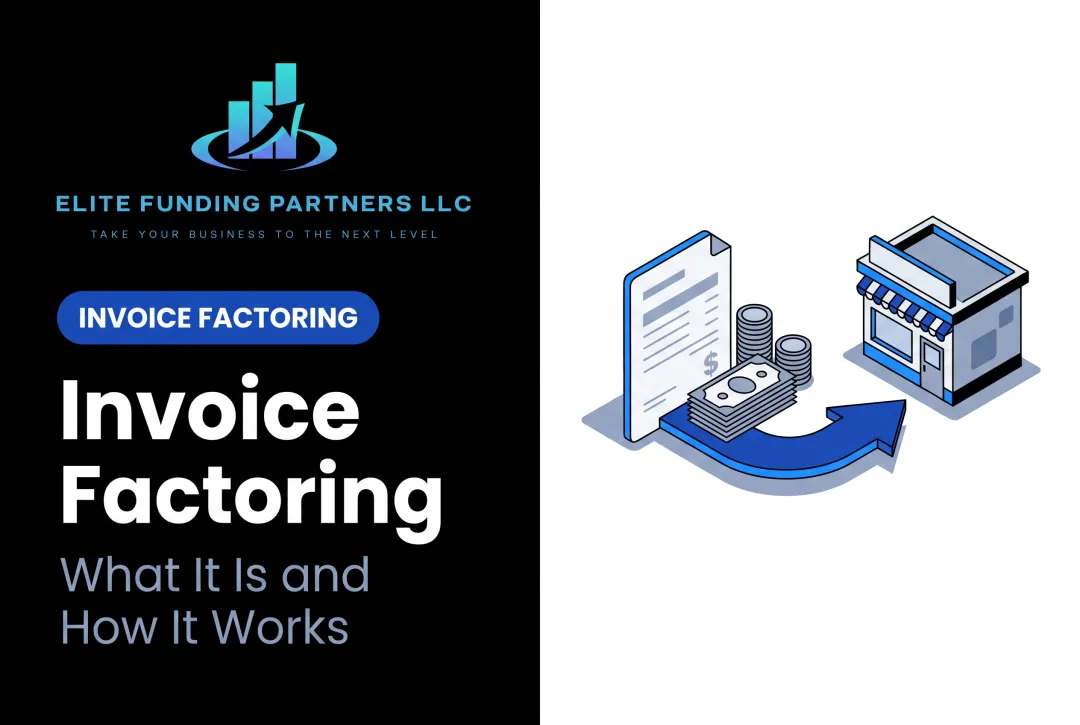
Invoice factoring converts unpaid invoices into immediate cash. You sell your outstanding invoices to a factoring company, which advances you a percentage upfront and collects payment directly from your customers.
How it works:
- You submit outstanding invoices to the factor
- The factor advances a percentage of the invoice value
- Your customer pays the factor directly
- You receive the remaining balance, minus fees
Unlike a bank loan, approval hinges on your customer's creditworthiness, not yours. According to NerdWallet's 2025 guide, factoring fees typically run 1% to 5% of invoice value per month.

- Best for: B2B and B2G companies with slow-paying customers
- Strengths: Fast funding, no new debt on your balance sheet, minimal credit requirements
- Limitations: Fees add up over time; the factor may control customer collections
Through Elite Funding Partners, invoice factoring advances run from $30,000 to $15 million, with terms up to 24 months.
Merchant Cash Advances (MCA)
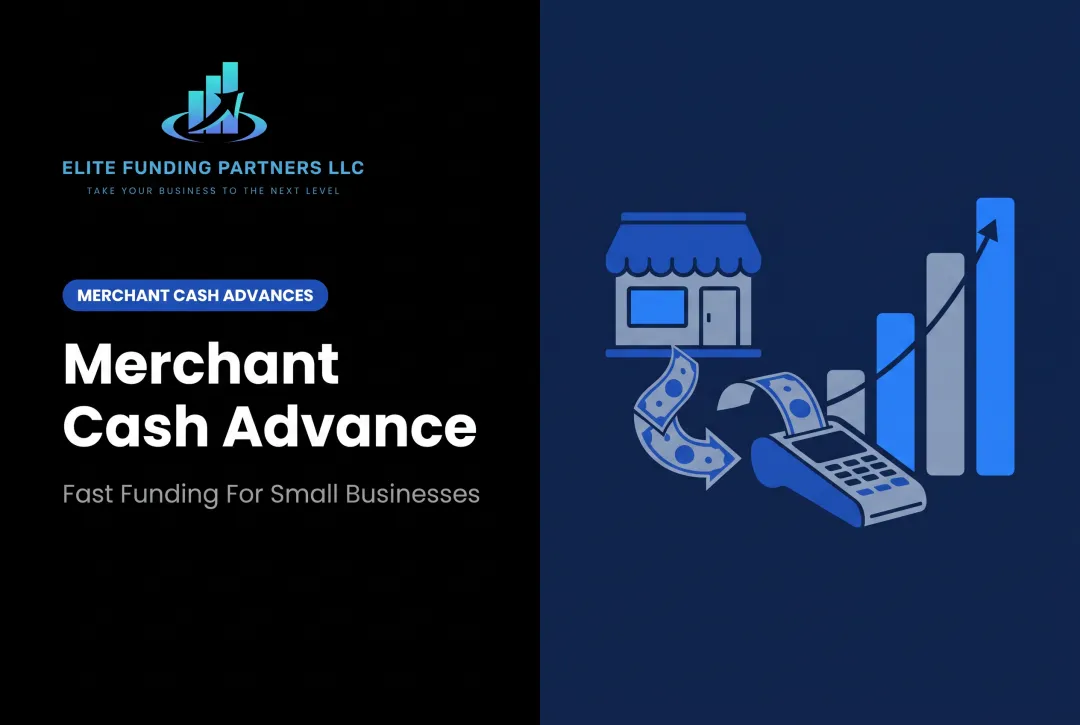
An MCA provides a lump sum upfront in exchange for a percentage of future revenue. You repay daily or weekly as sales come in. Instead of interest, MCAs use a factor rate (typically 1.1 to 1.5, according to NerdWallet). A $50,000 advance at a 1.2 factor rate means $60,000 in total repayment.
Repayment scales with revenue rather than following a fixed monthly schedule, a key difference from a traditional loan.
- Best for: Retail or service businesses with strong monthly revenue or bank deposits but uneven cash flow
- Strengths: Fast approval, no collateral required, repayment flexes with revenue
- Limitations: Can be one of the costlier financing options; tight during slow sales periods
Elite Funding Partners' MCA product ranges from $10,000 to $15 million, with no collateral required and same-day funding in most cases. Approval typically weighs monthly deposit volume, time in business, and revenue consistency, not just a credit score.
Business Lines of Credit
A line of credit gives you revolving access to funds. Draw what you need, repay it, and the credit replenishes — you only pay interest on the amount you actually use.
That setup differs from a lump-sum loan: it's reusable, not one-and-done.
- Best for: Ongoing working capital gaps or seasonal revenue swings
- Strengths: Flexibility, self-replenishing credit, interest only on funds drawn
- Limitations: Requires revenue history and established credit; limits may run lower than term loans
NerdWallet's 2026 benchmark cites a representative qualification bar of a 625 credit score, 12 months in business, and $100,000 in annual revenue — though this varies widely by lender. Elite Funding Partners' lines start at $25,000 and can be refinanced at maturity when you need to extend access.
Crowdfunding and Peer-to-Peer Lending
Crowdfunding raises small contributions from many backers, often on platforms under SEC Regulation Crowdfunding. That rule caps eligible raises at $5 million in a 12-month period. Peer-to-peer (P2P) lending connects borrowers with individual investors and bypasses banks entirely.
Both rely on public or investor appeal rather than a lender's underwriting criteria.
- Best for: Startups, product launches, or businesses without established credit history
- Strengths: No traditional qualification barriers; crowdfunding doubles as marketing and market validation
- Limitations: Crowdfunding campaigns often run all-or-nothing; P2P loans can carry higher rates and lower eligibility ceilings
A 2014 Federal Reserve study found P2P small-business borrowers paid roughly double the interest rate of those using traditional sources, even after controlling for application quality. Treat P2P as a targeted option, not your default primary facility, unless the all-in cost still beats the alternatives above.

How to Choose the Right Type of Alternative Financing
The right choice depends on your business's actual situation, not what's trending or what a competitor used.
Consider these factors:
- Funding purpose and urgency: An emergency payroll gap and a planned equipment purchase call for different products
- Business stage and credit profile: Newer businesses may lean toward MCAs or factoring over lines of credit
- Repayment structure: Daily repayment fits businesses with steady bank deposits or daily sales; fixed monthly terms suit predictable revenue
- Cost tolerance: Fees and factor rates vary significantly across product types
- Long-term flexibility: Will you need repeat access to capital, or is this a one-time need?
Businesses weighing several of these factors at once often benefit from talking the options through with a funding partner. Elite Funding Partners works with business owners to structure a funding mix, sometimes combining products like reverse consolidation with a line of credit, rather than defaulting to a single product.
What to Check Before Finalizing a Type of Alternative Financing
Before signing anything, run through this checklist:
- Don't default to the costliest option. If a line of credit covers your need, an MCA's factor rate may cost more than necessary.
- Map out the repayment impact. Daily or weekly repayment schedules can strain cash flow during slow weeks. Model this before committing.
- Read the full fee disclosure. Alternative financing terms are less standardized than bank loans; know the total repayment amount, not just the headline rate.
- Don't choose based on familiarity. The product you've heard of most isn't necessarily the best fit for your business stage.
When you compare fee disclosures, Elite Funding Partners provides transparent quotes with no hidden fees, built around your numbers rather than a generic rate sheet.
Conclusion
Alternative financing fills a real gap for U.S. businesses that traditional banks can't or won't serve fast enough. Whether you need a quick cash flow fix or capital for long-term growth, there's likely a product structured for your situation.
The differences between invoice factoring, MCAs, lines of credit, and crowdfunding aren't cosmetic. They affect your cost, repayment schedule, and cash flow for months. Understanding those differences, and working with a partner like Elite Funding Partners who can walk you through the tradeoffs, helps you pick financing that fits how your business actually gets paid.
Frequently Asked Questions
What can I do if no one will give me a loan?
Alternative financing options like invoice factoring or merchant cash advances often have more flexible qualification criteria than banks. Approval frequently weighs revenue consistency and customer creditworthiness over your personal credit score.
What are the different types of alternative loans?
Common alternative loan types include merchant cash advances, business lines of credit, invoice factoring, peer-to-peer loans, and revenue-based financing. Choose based on how fast you need funds and how you prefer to repay.
What are examples of alternative finance?
Examples include selling unpaid invoices for cash, advancing against future business revenue, raising funds on crowdfunding platforms, and borrowing through peer-to-peer marketplaces. Most skip traditional bank underwriting.
What are some alternative sources of business finance?
Sources include fintech lenders, crowdfunding platforms, angel investors, and CDFIs (Community Development Financial Institutions). CDFIs often focus on underserved or credit-challenged businesses.
What is an alternative lending company?
An alternative lending company is a non-bank funder that offers business capital with faster approvals and more flexible eligibility than traditional banks. Most specialize in products like MCAs, factoring, or lines of credit.
What are the main types of funding?
Funding generally falls into three categories: debt-based (loans, lines of credit), equity-based (investor capital), and revenue or cash-flow-based (MCAs, factoring). Alternative financing appears in all three and mainly differs in underwriting speed and flexibility.